540, 540E and 1000 RPM PTO: A Tractor Buyer’s Compatibility Guide for India
Aglist Editorial · Published 3 Oct 2026 · Last updated 21 Oct 2026
PTO shaft speed, engine speed and PTO horsepower answer different questions. Use Indian manufacturer examples and a dealer worksheet to check a tractor-and-implement combination before buying.
A PTO specification contains more than one speed, and reading the wrong number can produce an expensive mismatch. A tractor may reach 540 rpm at its output shaft while the engine is turning much faster. Another tractor can have a 1000-rpm output even though its engine horsepower is relatively modest. Begin with the implement's required input, then check the exact tractor configuration that can supply it.
This guide addresses the PTO speed and connection decision. It does not approve a particular attachment, prescribe operating settings for every tractor or replace the tractor and implement manuals. For the wider questions of hitch, weight and power, use our implement selection guide as a checklist and verify the actual combination with the suppliers.
Read shaft rpm and engine rpm as separate quantities
When a manufacturer writes 540 rpm at 1944 ERPM, the first number describes the PTO shaft and the second describes engine speed. They are not two selectable PTO outputs. Write them in separate columns on your buying sheet: required shaft speed, engine setting for that output, and the mode or gearing that applies.
PTO horsepower is another quantity. Knowing shaft rpm does not tell you the available power, and engine horsepower should not be turned into PTO horsepower using a guessed loss percentage. Ask for the applicable PTO rating and the implement manufacturer's power requirement, including the operating conditions attached to that requirement.
A useful first question for the dealer is: “Can this exact supplied tractor provide the speed and power specified in this implement manual?” A broad answer such as “it is a 50 HP tractor” does not resolve the shaft-speed question.
What 540E changes
Economy PTO is intended to obtain the required shaft speed at a lower engine speed under suitable loads. It is not a slower version of the implement's 540-rpm input. The manufacturer's instructions determine which jobs and settings are permitted; do not choose it only because the engine sounds quieter.
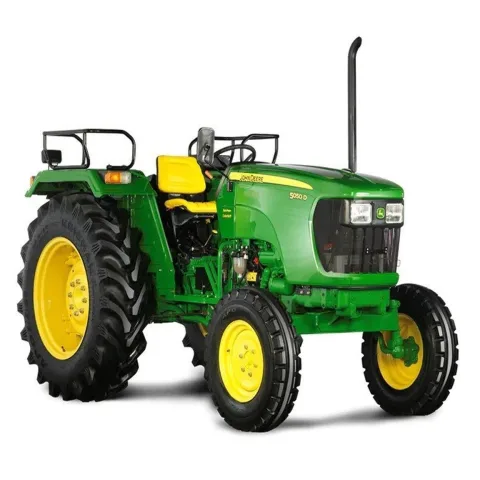
John Deere India's 5050D page explains 540 and 540E operation. Its description gives 540 shaft rpm at 1705 engine rpm in economy mode and distinguishes that from the standard setting used for maximum PTO power. These are model-specific details, not settings to transfer to another tractor. We do not infer a fuel-saving percentage for your job from that description.
If the quoted machine has economy PTO, ask the dealer to identify its permitted load range, selector and relevant instructions in the manual. If the workload needs the normal mode, using a lower engine setting simply to imitate 540E is not an equivalent arrangement. Keep the correct working gear as a separate decision from the required PTO output.
Why 1000 rpm is not an upgrade for every implement
An implement designed for 540 rpm does not become more productive merely because a tractor offers 1000 rpm. Its input-speed limit and approved driveline must be respected. A mechanically fitting connection is only one part of compatibility, not permission to run it.
A concrete Indian example is the Eicher 242 specification: the manufacturer lists a 21-spline shaft and 1000 rpm at 1616 engine rpm. The Eicher 333 instead lists a six-spline shaft and 540 rpm at 1944 engine rpm. Small horsepower does not establish which PTO a tractor has.
Do not solve a mismatch by adding a spline adaptor between a 21-spline 1000-rpm shaft and a six-spline 540-rpm driveline. HSE's PTO guidance specifically warns against that arrangement. Ask the manufacturers for an approved combination. This is machinery-safety guidance, not a statement of Indian registration law.
Options and engagement labels need their own line
A model family may offer more than one engine-speed setting for 540 output. Eicher's base 551 page, for example, lists a standard setting and an option. A slash or the word option on a product page does not establish that both are available on the machine being delivered.
Likewise, live PTO, independent PTO, dual clutch and reverse PTO should not be treated as interchangeable descriptions. Have the dealer identify the fitted system and demonstrate the prescribed engagement and stopping sequence. Reverse PTO is not a general authorisation to run an attachment backwards or clear a blockage while machinery is moving.
A worked purchasing decision
Suppose an existing attachment's manual requires 540-rpm input, specifies its shaft connection and gives a PTO power requirement. The buyer is offered one tractor configuration whose documented output matches 540 and another whose documentation lists only 1000. These are hypothetical offers; no dealer prices or field results are implied.
For the 540 candidate, continue checking the power rating, driveline and guard dimensions, hitch, loaded geometry and manufacturer approval. Matching speed is necessary but does not finish the purchase check. For the 1000-only candidate, pause the package selection and request a manufacturer-approved solution or choose a different compatible configuration. Do not accept an improvised adaptor or a guessed engine-throttle position as evidence of approval.
If a third offer includes 540E, the input-speed match remains 540. The extra question is whether the implement's actual load falls within the tractor manufacturer's permitted economy-mode use. An unloaded demonstration cannot settle how the combination behaves in the required job.
Build a handover sheet before payment
- Record the full tractor model, variant, PTO option and the manual version supplied.
- Identify every intended implement by model, manual, required input speed, shaft connection and power requirement.
- Write shaft rpm and the matching engine setting in different entries; identify the selected mode.
- Obtain supplier confirmation of the complete driveline, guarding, hitch and loaded configuration.
- Ask the dealer to demonstrate normal engagement, stopping and the response to a blockage under the manuals' procedures.
- Record which working task and load were demonstrated, what was not tested and any outstanding approval.
- Reconcile the delivered controls and shaft with the order before accepting a substitute specification.
Inspect connections only after the machinery is safely stopped and isolated according to its manuals, with movement fully ceased. Guards must be correctly fitted and maintained; keep people away from rotating shafts. Have the supplier assess driveline length and guarding through the intended movement rather than treating a shaft that fits while parked as fully checked.
Sources and limits
Manufacturer pages above and HSE's PTO guidance were checked on 3 October 2026. HSE is used for technical safety principles, not as Indian law. The purchasing example and handover sheet are original editorial guidance. No universal economy-mode setting, fuel-consumption figure or attachment approval is asserted. If the brochure, quotation and actual controls disagree, resolve that specific difference with the manufacturer or authorised dealer before use.